Knar Global LLC - Knowledge and Integration Architects
ENES
Home
Business Value
About
Our PhilosophyJorge Granada, FounderRegulatory Compliance
Architect Systems
Engineering Design & Concept OptimizationModel-Based Systems Engineering (MBSE)KIAME Framework
Optimization
Challenges
Digital Asset Value RealizationStop Unplanned DowntimeOptimize Maintenance SchedulingAssure Lifecycle Investment ValueUnlock Hidden Business ValueMake Better Capital DecisionsTransition to Cleaner Energy
Methods
Integrated Decision Support Systems (iDSS)Industrial Digital AssetsCausal Analysis & Non-RecurrenceOrganizational Competence BuildingProprietary MethodologiesPrysma CAUSALITYProbabilistic MethodsLife Cycle Cost OptimizationReliability-Profile Sparing
Services
Packetized Management CortexIntegrity Modeling ServicesRAM AnalysisIndustrial Digital AssetsIntegrated Decision Support SystemsNational & Regional Resource and Energy Decision ModelsLife Cycle Value AssuranceCausal Analysis & Non-RecurrenceOrganizational Competence BuildingStrategic Energy Transition
Case Studies
KnarLAB
Lab
Books
Blog
Contact
ENES
Skip to National & Regional Resource and Energy Decision Models content
  • Questions
  • Value at stake
  • Capabilities
  • Pseudo-planning
  • Deliverables
  • When required
  • Delivery
  • Limits
  • Your decision
  • Related
On this page
  • Questions
  • Value at stake
  • Capabilities
  • Pseudo-planning
  • Deliverables
  • When required
  • Delivery
  • Limits
  • Your decision
  • Related

Knar National & Regional Resource and Energy Decision Models

See What Your Country's Resources Are Truly Worth—Before You Commit the Investment

Decision-grade national and regional models that connect minerals, water, energy, exports and finance for investments that cannot be cheaply reversed.

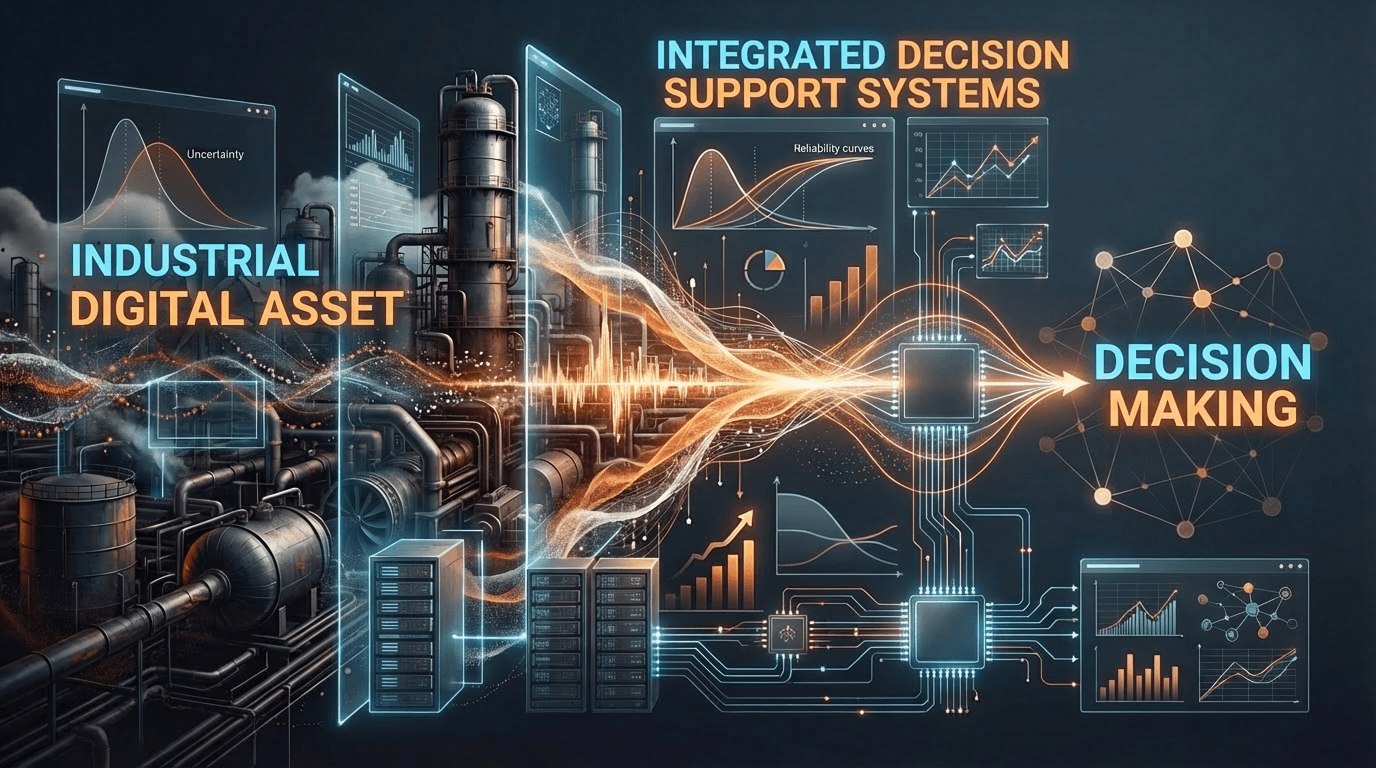
A Knar National & Regional Resource and Energy Decision Model gives ministries, national companies and investors one faithful picture of how the country's resources, energy and water depend on each other, and what each investment is really worth. It is built from Industrial Digital Assets and integrated into an Integrated Decision Support System (iDSS).

It shows where supply is constrained, which developments are viable, what each option changes across the country, and the range of returns investors can expect—before the decision becomes a concession, a transmission line, a power plant or a financing agreement.

Book a National Decision ReviewSee the value at stake

The central concept

A real national model is a working representation of how a country turns its resources into value. It connects mineral deposits, oil and gas fields, water basins and renewable potential with the mines, plants, lines, pipelines, ports and cities that depend on them, and with the prices, climate and finance that decide their worth. Each asset is an Industrial Digital Asset; together they form one Integrated Decision Support System. The model then tests each decision across many credible futures. The output is not a master plan in a spreadsheet. It is supply risk, viability thresholds, ranges of return, the right sequence of investment and a recommendation decision makers can defend.

Answers for ministers, boards and investors

  • Where, when and why will energy or water supply fall short, and what will each shortfall cost each region and project?
  • Which deposits, plants and lines are worth developing, and in what order?
  • From what ore grade, and from what USD per barrel or per tonne, does this investment make economic sense?
  • What is the range of profit if climate, prices or construction go against us?
  • What does exporting more minerals, gas or power do to domestic supply and to the money available for infrastructure?
  • Which single investment unlocks the most value across energy, minerals and regions at once?

Knar begins with the national decision. The model's boundary, data effort and detail are chosen only to answer that decision with the confidence it requires.

The value at stake

The evidence that minerals, water and energy are one problem is public. These figures come from published sources.

  • 1,019 of 3,777 MW

    Energy decides whether mines produce

    In 2024 a historic drought cut one country's hydropower, about 85% of its electricity, to 1,019 MW of a normal 3,777 MW. Mining is about half of national power demand and about 70% of export earnings; mines faced 40% emergency supply restrictions.

  • +31.4%

    Resources decide how much energy and water a country needs

    A national copper agency projects mining electricity demand rising 31.4% in ten years for a 20.7% rise in output, because falling ore grades need more energy and water per tonne.

  • 16+ years

    Time is the scarcest resource

    Major mines that started operating between 2010 and 2019 took more than 16 years on average from discovery to first production.

  • 600 million

    Investment must come from private capital

    About 600 million people in one region lack electricity; a global development bank states that massive private investment is crucial to connect 300 million by 2030.

  • 90%

    Estimates built on averages fail

    In a study of 258 transport infrastructure projects, about 90% exceeded their cost estimates, by 28% on average.

Read the numbers correctly

These are public figures that show the size of the problem. They are not additive. Their message is that a country's resource value depends on decisions about energy, water, time and finance that are rarely modeled together.

What makes a national model decision-grade

A decision-grade national model needs every capability below. Each closes a specific gap; if one is missing, the model cannot connect resources to supply, value and finance, and decision makers cannot rely on it to commit national capital.

  • One national network

    Represents resources, production and conversion, links and storage, domestic use and exports as one network, so constraints propagate across energy, water and minerals.

  • Resources as assets

    Represents deposits, fields, water basins and renewable potential with their grades, volumes and variability, not as fixed numbers.

  • Conversion and switching

    Represents energy converted in plants (gas into electricity) and switched at the point of use (transport moving from diesel to gas and electricity), each changing demand on different networks.

  • Mines as energy and water sinks

    Represents what each mining project needs in power, fuel and water, and whether that supply will exist when it is needed.

  • Exports as revenue

    Represents mineral, oil, gas and power exports under price and contract terms, and their trade-off with domestic supply.

  • Asset behavior

    Represents failure, repair, maintenance and aging of plants, lines, pipelines and tanks with RAM and integrity models, not one average availability.

  • Shared scenarios

    Applies the same prices, grades, climate and hydrology, demand and financing draws to every asset, through vertical Industrial Digital Assets.

  • Repeated simulation

    Tests many credible futures over 20+ years, producing expected and conservative outcomes such as P50, P80 and P90.

  • Economic conversion and traceability

    Translates physical results into viability thresholds, NPV, revenue and fiscal take, and traces every result to the assets, data and assumptions behind it.

Why integration mattersNo capability answers the national question alone. A decision-grade model follows the complete chain:
  1. Climate or market event

    ↓→
  2. Resource and energy availability

    ↓→
  3. Energy and water supply to each region and project

    ↓→
  4. Production and exports

    ↓→
  5. Revenue, cost and fiscal take

    ↓→
  6. Investment decision

Break that chain and the answer may look precise while being economically wrong.

Do not accept pseudo-planning

Spreadsheets are useful for inputs, checks and reporting. The problem begins when static workbooks, one per sector, are presented as a model of a country's resources and energy.

Do not accept a national plan or model that:

  • Reject: Uses average demand, average prices and average climate.
  • Reject: Plans energy, mining, water and exports in separate spreadsheets.
  • Reject: Approves a mining district without modeling the power, water and transport it needs.
  • Reject: Gives one NPV per project without a range or viability thresholds.
  • Reject: Assumes plants, lines and pipelines are always available.
  • Reject: Evaluates projects one at a time, without their side effects on other regions and projects.
  • Reject: Ignores the trade-off between exporting a resource and using it at home.
  • Reject: Treats conversion and switching between forms of energy as if they did not change demand on other networks.
  • Reject: Rebuilds the master plan from zero every cycle.
  • Reject: Cannot trace a result back to its data and assumptions.

The acceptance test

Ask the provider to trace one credible event through the model: “If a drought cuts hydropower while the mineral price falls, what happens to power for this mining district, to its exports, to national supply and to the financing case?” If the model cannot complete that chain, it is not decision-grade.

What decision makers receive

Base case
Where, when and why the country's energy and water supply is constrained, and what it costs each region and project.
Opportunity map
Which mineral and energy developments are viable, and under which price, grade and climate conditions.
Option comparison
The change in supply risk, cost and value of each investment or portfolio, measured against the base case at every region and project.
Investment sequence
The order in which to build, so each investment arrives before the constraint it solves.
Viability thresholds
The ore grade, price per barrel, tonne or MWh, and climate conditions at which each investment pays or stops paying.
Downside range
The expected outcome and a conservative outcome (P50, P80, P90), including bad climate and price years.
Financing view
Where the money can come from: export revenue, fiscal take, shared infrastructure and the risk each type of investor would carry.
Data-quality statement
What is known, what is assumed and how each limitation affects confidence.
Living national model
A decision asset the country's own planners operate and update as projects, prices and data change.

When a national model should be required

Require a national or regional resource and energy model when all three conditions are present:

  1. Condition 1

    The decision commits national resources, public capital, concessions or long-term contracts.

  2. Condition 2

    Minerals, water, energy, exports or finance interact: one project's supply, cost or value depends on another's.

  3. Condition 3

    Reversing the decision later would be expensive, slow or impossible.

Typical decisions include national energy and mining master plans, concession rounds, mining-district development, transmission and pipeline corridors, power-generation expansion, water allocation between hydro, mining and cities, export contracts for gas, minerals or power, energy-transition programs such as fleet electrification, and financing packages for shared infrastructure.

Do not commission the whole country by default. A national model is modular: start with the region, mineral or form of energy where the constraint is most acute, prove value, and add Digital Assets over time.

How Knar delivers it

This service extends an architecture Knar already designed for the strategic planning of a national liquid-fuels system, which modeled import, storage, pipelines and sales as one flow network and measured every plan by its impact on the final consumer price.

  1. 1

    Step 1: Start with the national decision

    Define the decision to be made, the institutions involved, the alternatives and the consequence of being wrong.

  2. 2

    Step 2: Set the minimum credible boundary

    Define the regions, resources, networks and first Industrial Digital Assets capable of changing the decision, and agree the data sources.

  3. 3

    Step 3: Prove the critical methods

    Catalog the analyses the country's institutions use or need, prototype the most critical ones, and trace each to a planning objective.

  4. 4

    Step 4: Build and integrate the national model

    Build the horizontal and vertical Digital Assets, integrate them into the iDSS on a stable computational core, connect existing data and test against history.

  5. 5

    Step 5: Produce the first national plan together

    With the country's own planning team, produce the base case, the opportunity map and a first portfolio of investment options, and validate them against previous methods.

  6. 6

    Step 6: Keep the model alive

    Train each role, transfer the capability and update the model as projects, prices and data change. Where preferred, Knar can host and operate it as a managed service.

What the model does—and does not do

A national model does not replace ministers, boards, regulators or investment committees. It does not set national targets or acceptable risk levels; those remain policy choices. It does not replace real-time control of grids or pipelines, and it does not make weak data disappear.

It makes dependencies, uncertainty, assumptions and consequences visible enough for accountable decisions. By combining resources, energy, water, exports and finance in one traceable model, it lets technical findings reach the decision table in the language of supply risk, value and bankability—and protects national strategy from the pressures of the moment.

Bring one national decision

Do not begin with “we need a national model”. Begin with the decision:

  • Which mining district should receive the next transmission line?
  • Should this gas be exported or used for domestic power?
  • Will this concession be viable at a lower ore grade or price?
  • Which investment unlocks the most value across energy and minerals?
  • Is the master plan robust to a dry year?
  • What would make this project bankable for private lenders?

Book a National Decision Review

Bring one pending national or regional decision: a master plan, a concession, a corridor, an export contract or a financing package. Knar will define the value at risk, the minimum credible model boundary, the data required and the outputs decision makers will receive. If a simpler analysis is enough, that will be said. If a national model is justified, the path to a decision-grade answer will be clear.

Bring your decision to Knar

See your resources as they truly are.

Then invest with confidence.

Keep exploring

Related methods and reading

National & Regional Resource and Energy Decision Models build on a wider body of Knar methods, topic guides, articles and applied cases. Start with the one closest to the decision you are weighing.

Services and methods

  • Integrated Decision Support Systems (iDSS)How many Digital Assets are integrated into one decision system.
  • Industrial Digital Assets (IDA)The executable asset models that are the building blocks of every national model.
  • Strategic Energy TransitionDecarbonization paths that keep supply reliable and create business value.

Topic guides

  • Monte Carlo simulationHow repeated simulation produces the P50, P80 and P90 outcomes behind a recommendation.
  • Uncertainty quantificationHow uncertain inputs are turned into ranges decision makers can use.
  • Capital and operating decision analysisHow major capital and operating choices are compared on one basis.

Articles and applications

  • Unlocking National Mineral and Energy Value with iDSSWhy resource-rich countries stay frozen, and how one faithful national model changes that.
  • Case studiesDocumented Knar work across oil and gas, power, mining and complex capital systems.
Knar Global LLC - Knowledge and Integration Architects

Knowledge and Integration Architects for Mission-Critical Industrial Systems

Houston, TX

info@knarglobal.com
+1 (469) 473-1708

About

  • Our Philosophy
  • KIAME Framework
  • Jorge Granada, Founder

What We Do

  • Architect Optimal Systems
  • Solve Your Challenges
  • How We Work
  • Business Value We Deliver

Solutions

  • Stop Unplanned Downtime
  • Optimize Maintenance
  • Capital Decisions
  • Energy Transition

Resources

  • Case Studies
  • Blog
  • KnarLAB
  • Contact Us

Newsletter

Subscribe to receive insights on industrial optimization, reliability engineering, and decision support systems.

We respect your privacy. Unsubscribe at any time. No spam, only valuable insights.

© 2026 Knar Global LLC. All rights reserved.

Installing cognitive infrastructure, not delivering reports.

Contact Us